

PREVENTING WATER LOSS FROM PIPELINE NETWORKS
EVER since man started channeling water he has had problems with water loss. Leaks, theft and inaccurate data were all in a day’s work for the man in charge of Rome’s aqueducts, Sextus Julius Frontinus.
And as water pipeline networks have grown in size and complexity, so has the problem.
Today water losses from individual utility networks can be more than 50 per cent of the total water put in, even in parts of Europe. This is a huge financial problem for water providers and, in an era of climate change, a reputational one as well.
Water scarcity adversely affects watersheds and threatens essential water supplies to people and businesses.
In this blog we look at strategies for water loss prevention and examine a new generation of digital technologies based on AI which is moving water loss prevention from reduction and detection towards prediction and avoidance.
Identifying real water loss
Leakage is one part of a phenomenon known as non-revenue water (NRW). NRW is a broad term for all the water introduced into a water network which is never paid for, either because it goes missing, gets stolen or is used for non-billable activities like mains cleaning.
Leakage is a ‘real’ or ‘physical’ loss of water from a network. It’s by far the biggest element of NRW and a huge waste of water, treatment chemicals and energy. Around 4% of the world’s power is used treating and pumping water.
In areas where electricity is generated from fossil fuels, leakage is a huge barrier to the sector’s decarbonisation efforts too.
All public water networks have leaks and there is a level where fixing a leak has more economic, social and environmental consequences than not fixing it. So, the first step in any water loss prevention programme is to understand the scale of the problem and to set a reasonable target to track performance.
This is done by carrying out a water balance, or water audit, to identify the volume of real water loss and then doing a cost benefit assessment to establish a performance target based on a level that is financially sustainable.
The IWA’s Water Balance is generally considered the best practice standard methodology and many regional versions of it exist adapted to local conditions.

Reducing water loss with active leakage control (ALC)
It is fair to say that if leakage was easy to rectify utilities would have done it by now. Knowing how much water you’re leaking is one thing, finding it and fixing it is another. About 90% of leaked water never shows above ground, making it costly and time-consuming to pinpoint, locate and repair.
Most water utilities around the world, especially the smaller ones manage leakage reactively, meaning they only investigate and repair leaks if there’s a visible burst, or a customer complains of poor or no water pressure.
Better-resourced networks use active leakage control, or ALC, which is a policy of monitoring their distribution system for signs of leaks and employing a dedicated team to find and repair them as they happen.
ALC is concerned primarily with identifying and repairing leakage quickly but, in the context of real water loss, prevention goes much further. It means taking steps to stop leaks from happening as well as minimising the amount of water loss when they do.
Equipment like meters, remote monitoring and controls and sensors are the backbone of most mature water loss prevention programmes. However, advances in AI are opening up opportunities for instant digitisation even in networks with no current smart water capabilities.
Advanced leak detection technologies
Advanced leak detection technologies encompass everything from specialised equipment and techniques to innovative software and service models. Examples include aerial and satellite imagery, advanced metering infrastructure (AMI), in-pipe live leak location using gas or electricity, data analytics and AI as data-as-a-service (DaaS).
Investing in advanced leak detection technologies can be expensive and water utilities may need to deploy a range of them depending on the specific characteristics of their networks and what they want to achieve.
To maximise return on investment and optimise use of limited resource, a strategic intervention programme is needed.
In the UK, which has one of the most mature, well- documented leakage regimes in the world, resulting from decades of regulation, they use a phased approach to leakage interventions known as PALM. PALM stands for Prevent, Aware, Locate and Mend.
It incorporates all the elements of ALC, but goes further by addressing the causes of water loss and the need to sustain performance..
UK industry regulator Ofwat has outlined the main features:

THE PALM APPROACH TO LEAK DETECTION IN DETAIL
Phase 1: Prevent:
Preventing leaks means tackling the reasons they happen, from poor installation and operation through to material degradation like corrosion, and limiting their impact when they do. This could be through better quality control of pipe-laying activities, as well as improved pipeline maintenance and operational procedures. The ultimate fix is to replace or re-line the pipe completely but this is expensive, disruptive and not always the best bang-for-buck.
Active pressure management (APM) uses remotely controlled valves to dynamically lower pressures, reducing the likelihood of new leaks and the volume lost through existing leaks.
‘Calm network’ procedures such as the controlled operation of valves to help avoid moving pressure transients, which act like a hammer on weak portions of pipe wall and are a known factor in network failure and bursts.
Phase 2: Aware
Dramatic as they are, sudden water main bursts tend not to add much to overall leakage because they are easy to find and fix. Leaks that do not surface can run for years, meaning even small ones add up to a lot of waste and potential underground damage. This ‘run time’ can be as significant as the size of the leak unless you know where to look.
Fortunately, leaks leave a trail even before undesirable customer outcomes come to light. District metered areas (DMAs) – discreet areas of water pipes served by a single bulk meter – make it easier to identify areas of sudden change, indicating the presence of a leak. Other tools like aerial or satellite imagery, sub-DMA metering, intense pressure logging and temperature sensing offer even more granular detail.
But the main weapons in the war on leaks detection are built around acoustics. Listening for leak noise can be done manually, but digital tech like acoustic loggers or sensors can be used to automatically detect noise increases in pipes and act as an early warning system. Technology is expensive and doesn’t necessarily mean less manpower is needed.
Considerable extra data must be manually checked to eliminate high levels of false positives. For networks without sensors, acoustic detection means carrying out time-consuming area sweeps manually on foot, using mobile sensors and a metal tube with an earpiece called a listening stick.
Phase 3: Locate
Dry digs are a costly pitfall for leak teams, so it makes sense to thoroughly check any point of interest before arranging work on site. Most mature ALC policies require at least two further ‘points of evidence’ before ordering a dig. This falls to a field-based operative to confirm and pinpoint the leak on the ground.
The precise pinpointing of leaks in this way is still largely manual and many technicians use the listening stick as their tool of choice in a process known as ‘sounding’. In urban areas, this means going out at the quietest time of night, when distracting noise from traffic and water flow is less. But even so, the process can be inaccurate.
Noise does not travel well along plastic pipes and the lower leak noises, typically linked with the larger leaks, are below the threshold of human hearing. Digital acoustic tools have evolved to help and are used for additional confirmation, such lift-and-shift sensors, ground microphones, correlators.
Other techniques include step-testing, where small parts of a network are systematically switched off, but this is not always practical. Specialist live in-pipe inspection using CCTV, gas, electricity and floating sensors are also available.
Phase 4: Mend
As well as being a crucial part of leak reduction reporting, leak repairs can have an effect on continuing leak detection and prevention. Pipe repairs do fail and, even if they don’t, could trigger new leaks in the same section of pipe.
It has been speculated that this phenomenon is due to movement during repair work or an increase in pressure due to more water staying in the pipe.
Another hard-to-spot issue which can only be detected once a repair is complete is the presence of a second leak previously masked by the first. Technologies now exist which verify and monitor the effectiveness of leak repairs, giving increased confidence for reporting and revenue assurance.
Leak prevention technologies
One of the benefits of long-running water loss reduction programmes is that the accumulated leakage data provides crucial insight into the worst performing pipes to better inform strategic investment.
Advanced tools which are connected by IoT deliver vast quantities of valuable real-time information on network conditions and behaviour. This data can be exploited at scale by AI to generate actionable insight with immediacy.
Smart data analytics and automation improve both the accuracy of decision-making and the speed of interventions and are moving leak prevention towards leak prediction.
At the top of the investment scale are digital twins. Digital twins are dynamic virtual models of real-world water networks based on GIS data. They use machine-learning interpretation of real-time sensor data and information on historic performance to replicate performance and simulate outcomes.
Digital twins deliver operational analytics for managing a wide range of water network management, of which loss control is one part. However, the size and complexity of most water systems means sourcing and installing the number and range of instrumentation needed to create reliably representative digital twins can be prohibitively expensive for less well-resourced utilities.
The good news is that similar functionality can now be delivered more cheaply with new standalone AI which has been developed specifically for water loss prevention. Some of these, like FIDO AI, offer unique insight like leak size and comes as a complete sensor-inclusive data-as-a-service subscription. FIDO AI could be incorporated into a digital twin or used as an independent end-to-end service.
Creating a smart leak prevention programme using FIDO AI
FIDO AI helps clients improve financial returns and meet regulatory targets using actionable insight backed with volumetric evidence at multiple points in the PALM value chain. Our AI has the unique distinction of being able to identify and, most importantly, rank leaks by size, even in the noisiest networks, and regardless of pipe material or condition.
This single piece of actionable insight on leak size enables utilities to quickly and prioritise repairs, reducing leak run time, and therefore, maximising water loss reduction.
But more than that, at FIDO we treat each leak as an asset. Once our neural network identifies a leak, it is assigned a unique ID code, enabling it to be tracked. For larger leaks, making volumetric assessments, flagging them as a priority, and verifying effective repairs adds evidence for performance indicators and gives revenue assurance.
For smaller or aggregated leaks, this could mean monitoring them as they change or degrade to a point they become economic to repair.
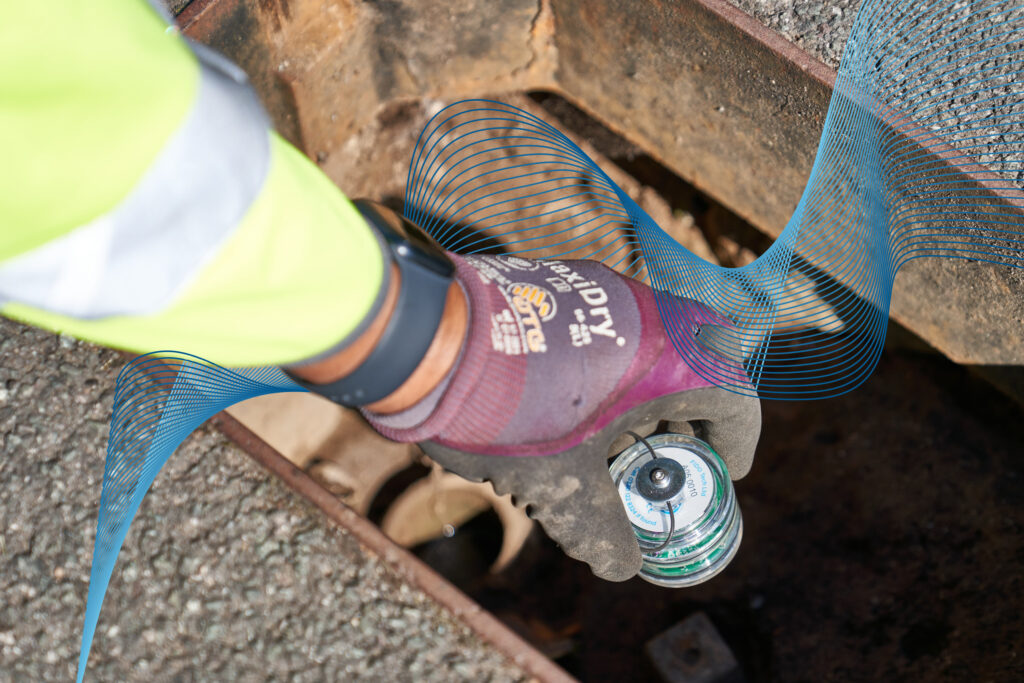
FIDO sensors record continuously meaning nothing is missed. Leaks are plotted by size on GIS maps and can be delivered in field to a smartphone app or in the office via our API. Leakage data normally kept siloed in disparate systems is gathered and kept in perpetuity, building an invaluable archive which can inform investment decision-making.
FIDO’s solutions like Network Monitor and Leak Locate help utilities reduce water loss end-to-end from detection, to investigation and repair verification, and are now used by utilities around the world.

