Contributors

FOR years, utility leakage teams have focused on finding and repairing leaks on public water networks. But as the proportion of leakage from mains goes down, another source of water loss is gaining in importance: customer-side leakage.
Unlike a burst water main, customer-side leaks are often small and invisible. They rarely create dramatic surface flooding and can run undetected for months, or even years, wasting thousands of litres of water and making leakage reduction targets harder to achieve.
What is customer-side leakage and why is it so difficult to reduce?
Customer-side leakage occurs on pipework belonging to the property owner. This includes service pipes to the property, as well as internal plumbing fixtures like toilets and tanks. But just because the pipework is not theirs and they don’t have the right to fix it, utilities can still be responsible for customer leakage – as is the case in the UK.
As much as a quarter of ‘total leakage’ in the UK happens on customer-owned underground supply pipes.
The challenge for public utilities and municipalities is that - if there is no puddle or damp patch - some customers do not believe a problem exists. This is particularly true for unmetered properties, where they don’t pay for the wasted water.
What is the traditional way of finding customer-side leaks?
The hunt for customer-side leaks often begins when a fault on the nearby mains network has been ruled out. The leakage technician will get out their listening stick and place it on all the stop taps in the street, a survey process known in the trade as ‘stop tap bashing’. If they hear a noise, it’s up to their expertise and judgement to assess if it is leak on the customer side of the tap.
Leak techs are really good at this, but there are limitations. Background noise can mask leaks, quieter leaks may be missed entirely, and it can be difficult to convince a customer based solely on an engineer's judgement. Most importantly, the process leaves little auditable evidence.
How can acoustic sounding help utilities find customer leaks?
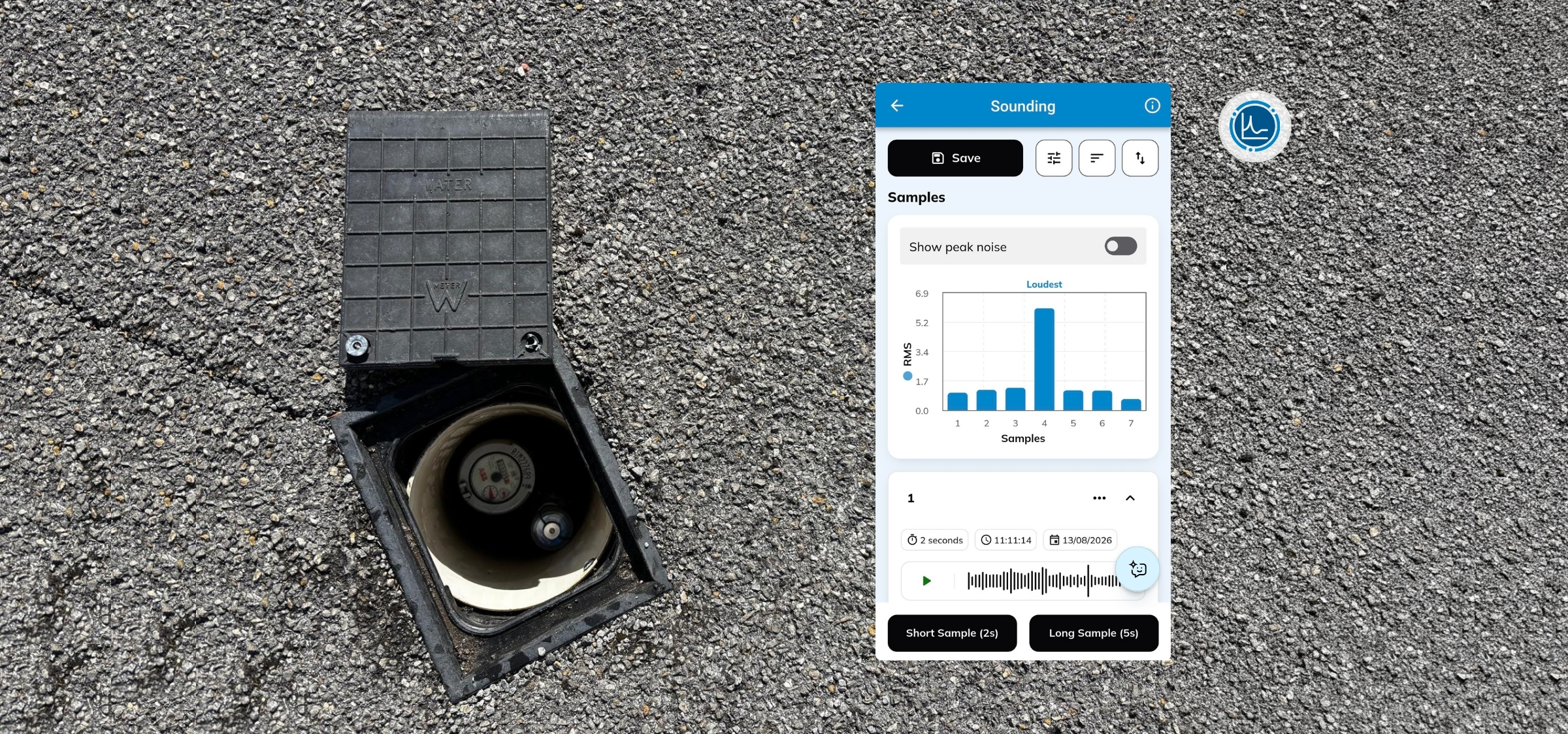
Using a FIDO sensor to take soundings at every stop tap has several advantages. First, you pick up leaks that are difficult or impossible to hear with the human ear. Second, you get a permanent digital record and audio recording from every tap, which you can review in the FIDO app and re-listen to as often as you like.
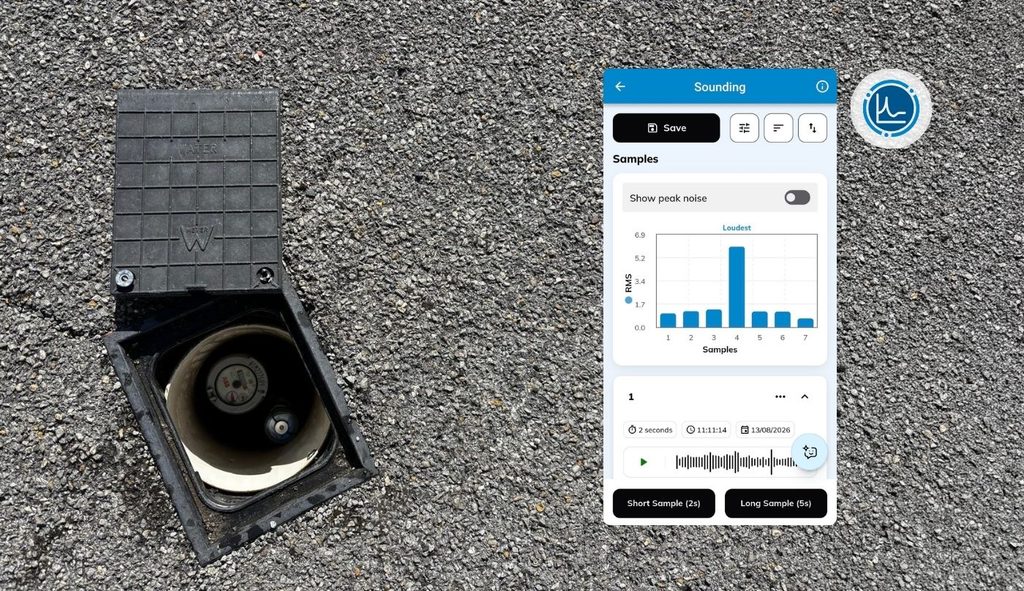
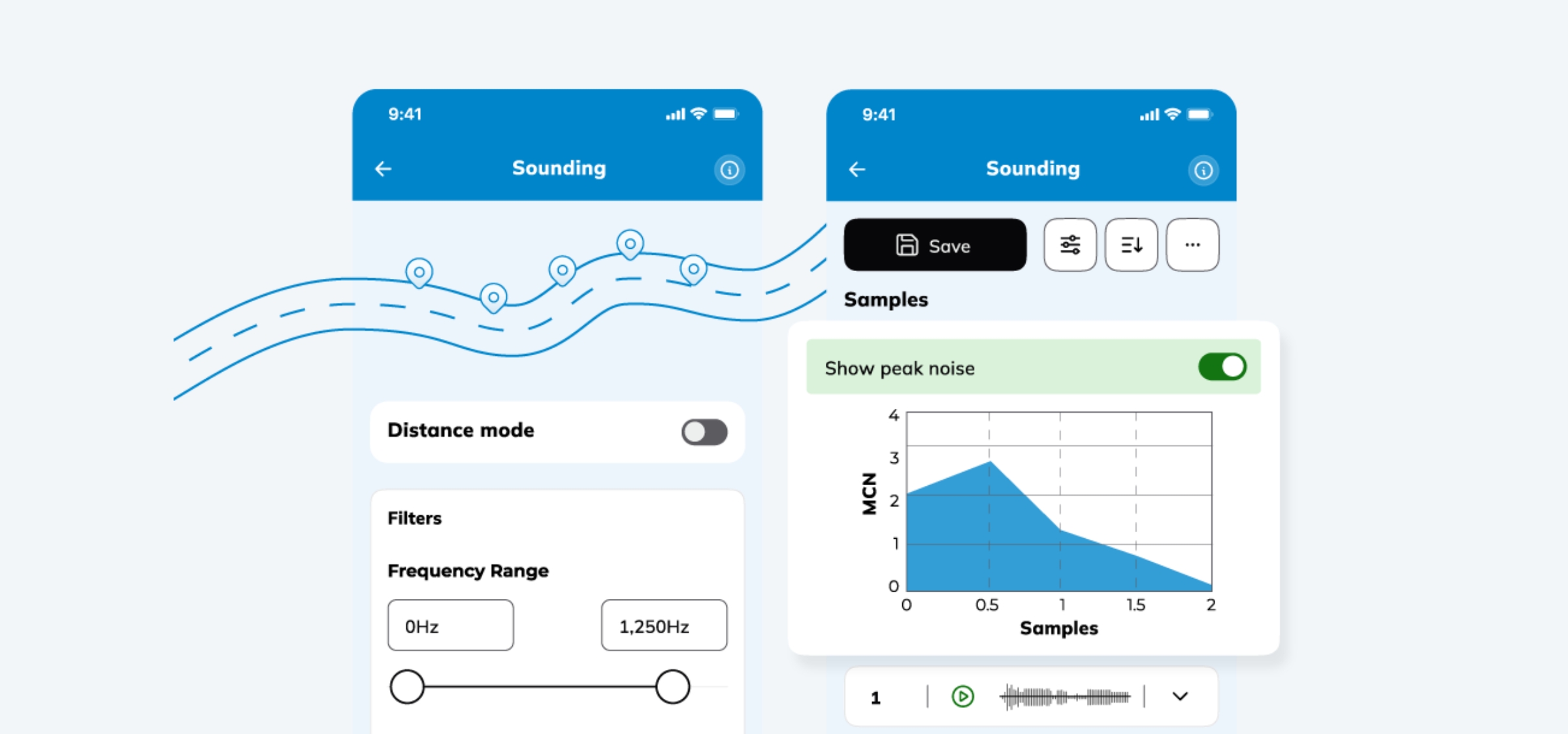
You can deep dive into any frequency graph to compare them to samples you may have collected overnight. And, finally, each sample’s loudness is plotted side-by-side on a chart so it’s easy to identify the most likely location to start your customer engagement.
This enables leakage teams to:
- Screen entire streets quickly
- Detect service pipe failures that you might otherwise miss
- Reduce dependence on subjective listening assessments
- Prioritize properties most likely to have leaks
How can water companies convince a customer they have a leak?
Finding a leak is only half the challenge. Convincing a customer that a leak exists on their property is another.
To do this, technicians can temporarily isolate the supply by shutting-off the stop tap and inviting the customer to listen to the change in noise. If the noise disappears when the tap is closed, it’s evidence the leak is on the customer's side. The problem for customers, especially in noisy street environments, is that it is hard for an untrained ear to perceive slight changes. By using a FIDO sensor instead, techs offer customers objective proof in the form of acoustic recordings and graphs taken before and after shut off.
Using acoustic monitoring to improve customer engagement
Other acoustic tools can also be used to improve engagement with customers.
By leaving a sensor in place overnight, technicians collect acoustic recordings at defined times while the customer is asleep. If leak activity is detected repeatedly during periods when no water should be in use, the resulting graph provides compelling evidence that a leak exists. Carried out over several consecutive nights, FIDO includes additional AI confidence on the presence of a leak and even an indication of its size.
FIDO Consumption Profiling provides even more granular evidence about usage patterns inside a property boundary.
It uses a single FIDO sensor to collect detailed data showing how flow rate fluctuates inside the pipe. This can be compared to an initial baseline. Unlike spot readings, consumption profiling demonstrates that flow continues throughout the night and across multiple days, strengthening the case for repair.
One of the most powerful features of FIDO Consumption Profiling is its ability to visualize recent memorable water events such as showers, toilet visits or, in the case of commercial premises, tank fills as spikes on a timeline.
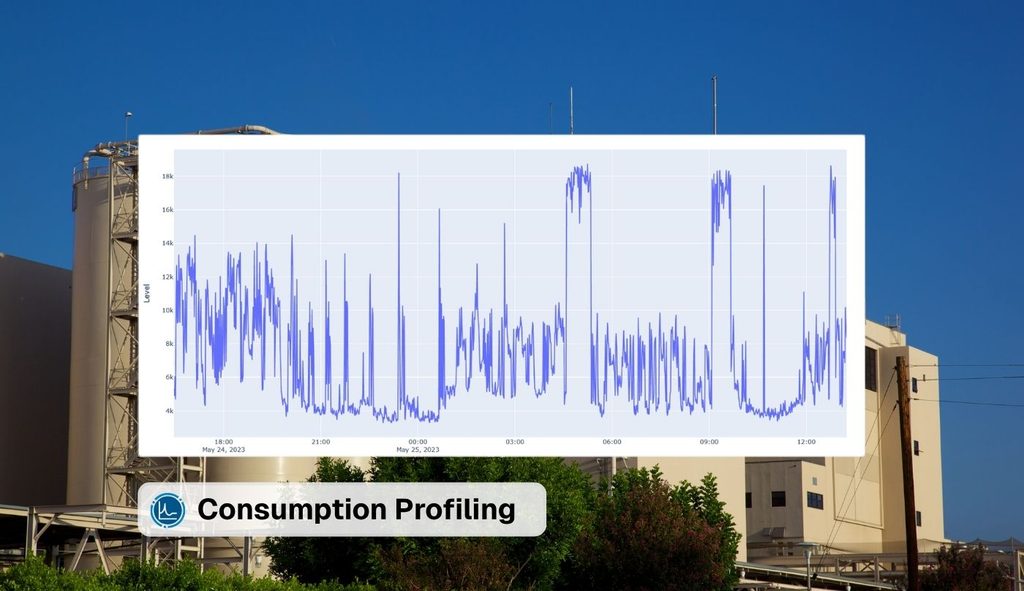
When customers recognise their own activities in the data, confidence in the monitoring results increases dramatically.
Using data to support enforcement and compliance
For water companies, even relatively small leaks waste significant volumes of water when left running over long periods. Prompt action reduces leakage volumes, improves regulatory performance, lowers production costs and strengthens drought resilience.
In situations where customers repeatedly refuse to act, utilities can use the data evidence to support compliance or enforcement processes.
The auditable trail in the FIDO Hub includes:
- GPS location data
- Time and date stamps
- Photographic records
- Acoustic recordings
- Historical monitoring results
What is a good strategy for customer-side leakage management?
As utilities get better at reducing leakage from their own infrastructure, customer-side leakage will play a bigger and more high profile role.
The most successful strategies will include improved detection, enhanced customer co-operation and, as a last resort, properly evidenced enforcement action.
FIDO Leak Locate incorporates acoustic detection, overnight monitoring and consumption profiling in the same device to give water utilities the tools that help not only find hidden customer leaks, but also turn them into visible, understandable data that customers trust.
More questions answered
In most cases, the property owner is responsible for repairing leaks on their own pipework. However, without obvious, visible evidence, they may not be aware or convinced that a leak exists. This can be a problem for water companies who are tasked with reducing total leakage.